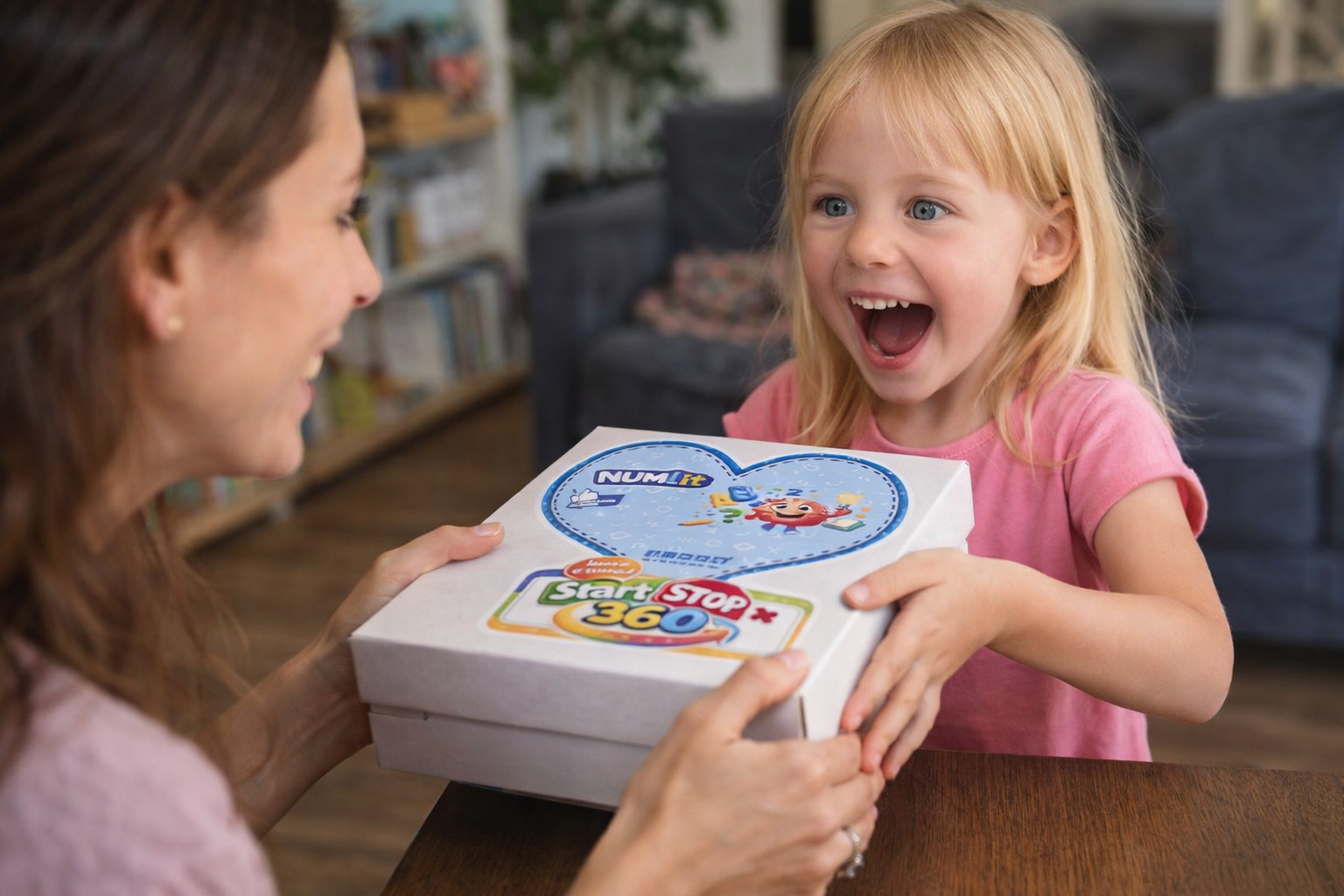
Preparatory class doesn't start with perfect letters, quick math, or lots of flashcards. Start with confidence.
For a child, the transition from kindergarten to school is a big step. A new rhythm, new rules, new colleagues, new requirements appear. Therefore, the most important thing we can do as parents is not to rush him, but to help him feel capable.
A school-ready child is not the child who already knows the entire alphabet. It is the child who can listen to a simple request, can concentrate for a few minutes, can hold a pencil in his hand, can recognize shapes, colors, numbers and can try again when he makes a mistake.
Before the preparatory class, the child needs to develop his fine motor skills. His hand must be prepared for writing, and this is done gradually, through lines, circles, loops, tracing, coloring and coordination games. No need to write much. It needs to gain control, patience and safety.
Equally important is orientation. The child needs to understand simple concepts such as up, down, left, right, big, small, near, far. These things seem simple to the adult, but to the child they are the basis on which writing, reading and mathematics are built.
Then come the numbers and letters. Not with pressure, not as a test, not with "you have to know". The child can begin to recognize numbers from 0 to 10, count objects, observe quantities, associate a number with a picture. Likewise, he can discover letters through sounds, pictures, color and play. The goal is not to memorize mechanically, but to understand naturally.
Another important sign of preparation is autonomy.
Can the child start an activity? Can he make it to the end? Can he ask for help without giving up? Can he accept correction without feeling that he has made a "grave" mistake? These skills matter enormously in the first months of school.
That is why preparation for the preparatory class should be gentle, short and steady. Better 20 minutes a day of play, color and encouragement than an hour of stressful work. The child learns more easily when he feels that he is succeeding, not when he is afraid of making mistakes.
NumLit materials are built
exactly for this natural transition from playing to learning. Through notebooks, reusable boards, cards, visual games and interactive materials, the child practices motor skills, attention, orientation, numbers, letters and logic in a natural way, without unnecessary pressure.
For motor skills and hand preparation,
graphics cards, reusable boards, tracing books and coordination games can be used. For numbers and the first mathematical notions, they are useful
- Little Mathematician 0–10,
- Numbers Grades 0–10,
- The Power of Numbers 0–31,
- Palettes with CP Numbers
- Snake Game
- or, the most important system, the SMART 31 Multifunctional with dice.
For attention, logic and simple rules, the child can work with
- Responsible Gaming,
- Game Total CP,
- NumLit Secret Code
- or the MotriLogic Game.
For letters and the alphabet, visual materials such as
- Give color to the Alphabet,
- Alphabetical
can turn letter discovery into an enjoyable experience.
Preparation for school
doesn't mean making a child a student ahead of time. It means helping him enter the classroom feeling that he can, that he knows how to try, and that learning can be a joy.
On NumLit.eu, the materials are grouped into clear categories, according to age, subject and developmental goal, so that every parent or teacher can more easily choose the right resource. For personalized recommendations, we are at your disposal through the virtual assistant on the website, by direct message on WhatsApp, but also through the free resources in the Virtual Library, Video Library, Blog and NumLit Games.