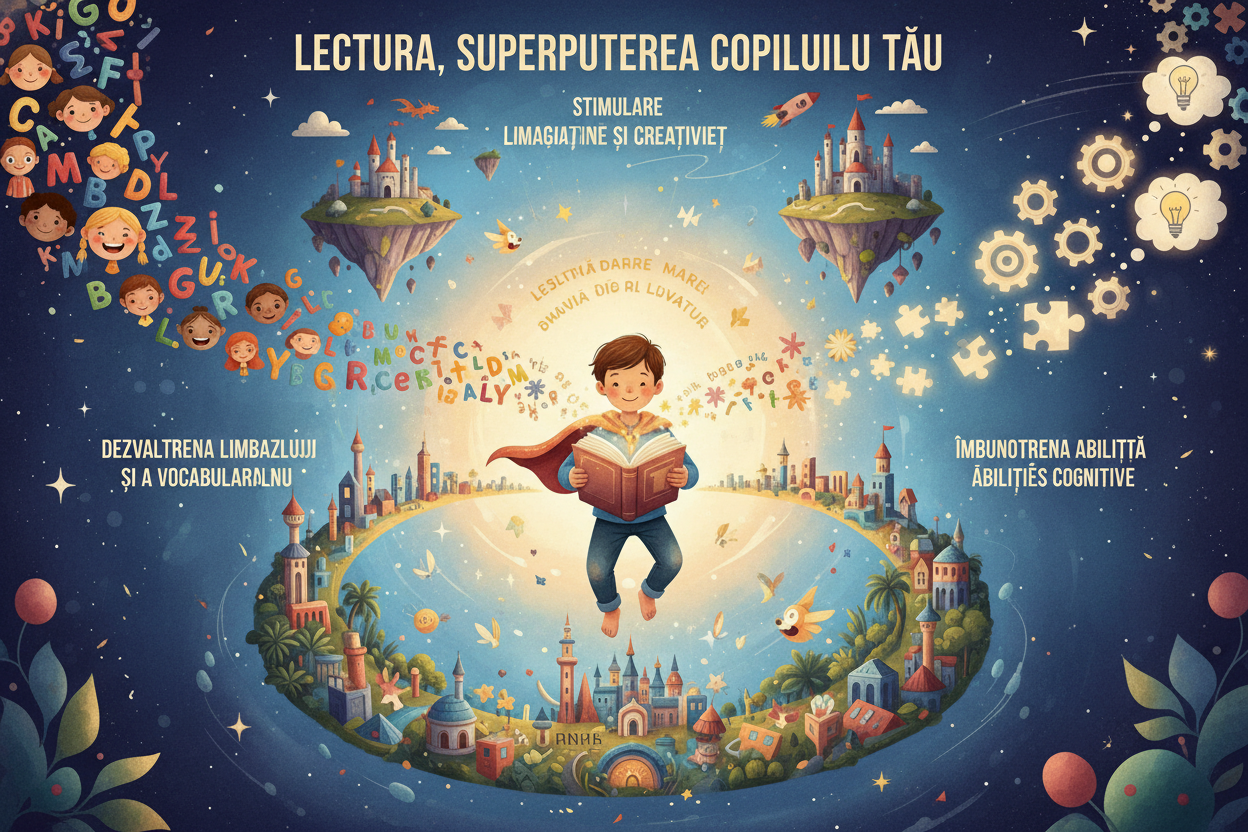
Reading — the foundation of academic success
Research shows that children who read regularly have a vocabulary 3 times richer than those who do not read, perform better in all subjects and develop superior critical thinking skills.
Cognitive benefits
Reading stimulates multiple areas of the brain simultaneously. Improves working memory, ability to concentrate and problem solving skills. Children who read 20 minutes a day are exposed to approximately 1.8 million words per year.
Emotional Development
Through characters and stories, children learn empathy, understand complex emotions and develop emotional intelligence. Fiction, in particular, helps them see the world from other people's perspectives.
How to encourage reading
Create a daily reading ritual—even 15 minutes before bed. Let the child choose what to read. Visit the library or bookstore together. Most important: be a model — read in front of the child.
Age recommendations
3-5 years: picture books, short stories with repetition. 6-8 years: first independent readings, evenings for children. 9-12 years: novels for children, encyclopedias, educational comics. 13+ years: adapted classic literature, non-fiction on topics of interest.